


I watched a documentary recently: The AI Doc: Or How I Became an Apocaloptimist (2026).
Like most films on AI, it asks the big questions.
Will this help us? Hurt us? Replace us? Save us?
Those questions matter.
But something else stood out to me that I don’t hear talked about as much.
We are trying to build collective intelligence before we’ve learned how to be conscious together.
Here’s the documentary that sparked this reflection:
This is not just a conversation about artificial intelligence.
It is a conversation about emotional intelligence, emotional maturity, and how humans make decisions.
The Part We Keep Missing
AI is moving fast.
Different groups are building powerful systems.
Many of them don’t trust each other.
Some are competing to get there first.
There’s a quiet risk in that.
If speed becomes the priority, the group willing to take the most shortcuts may be the one that gets there first.
That’s not a technology problem.
That’s a human problem.
Our intelligence is accelerating.
Our emotional maturity is not.
What I’ve Seen Over Time
Most of my work has been helping people recognize patterns in their own lives.
Not by arguing with them.
Not by giving advice.
By helping them see those patterns reflected in stories.
When people see it, something shifts.
They stop reacting.
They start recognizing.
And that recognition changes what they do next.
People don’t change because they’re told something.
They change when they see something clearly.
The Sequoia
The best way I can describe where we are is this.
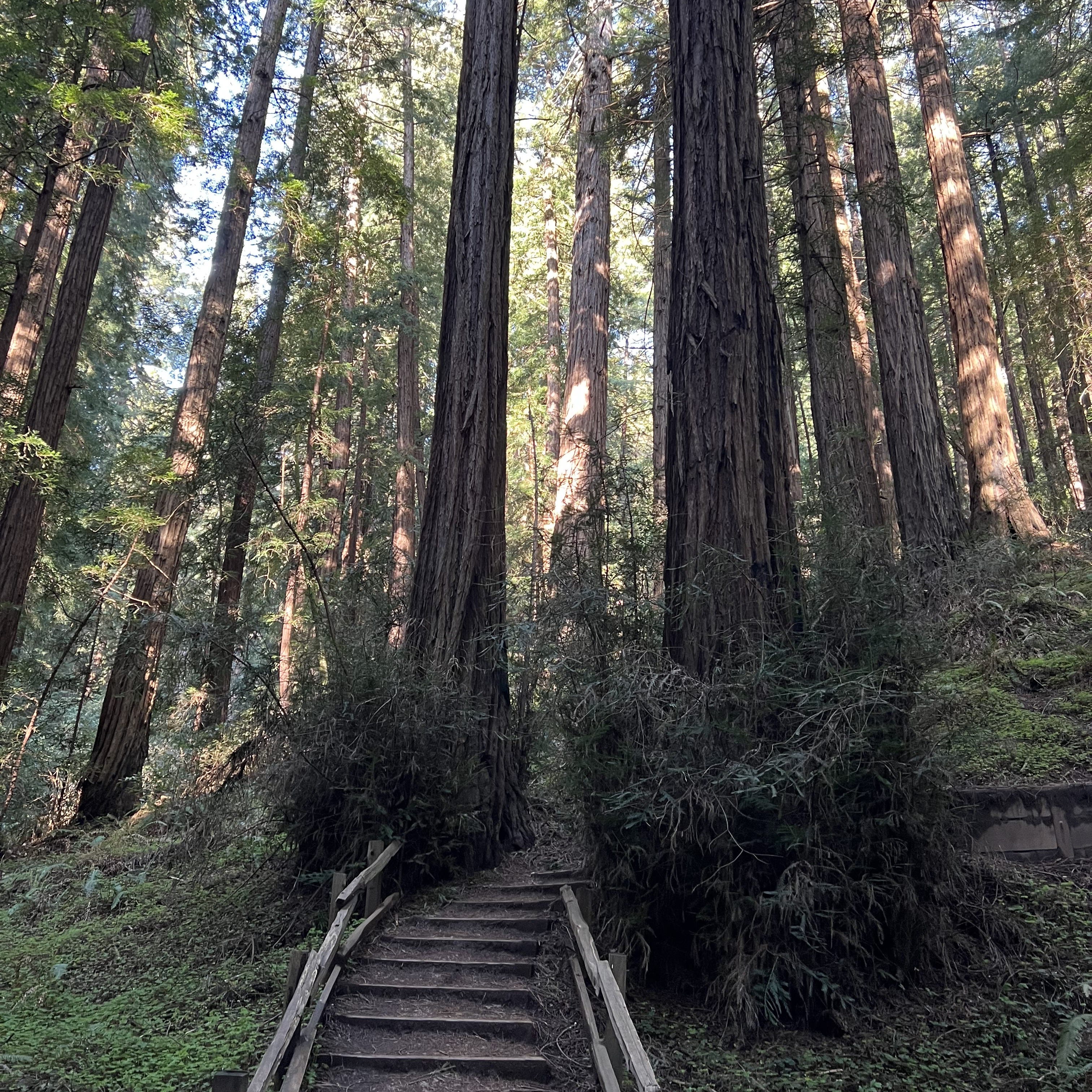
Humanity is like a great sequoia tree.
Most of us are living on the lower branches,
spinning in the same patterns over and over.
At that level we defend, compete, react, and protect our position.
We don’t even realize we’re on a tree.
Then something happens.
Curiosity.
We begin to climb.
As we move higher, we start to see where we’ve been.
We recognize the patterns we were stuck in.
At some point we realize we’re not just on a branch.
We’re part of a tree.
And if we keep going, we see the forest.
Where AI Fits
AI is doing something extraordinary.
It is connecting knowledge across silos that have always been separate.
Science, technology, philosophy, art, and medicine.
In a way, AI is helping us see the forest.
But seeing the forest does not mean we know how to live in it.
A Different Kind of Intelligence
We tend to think intelligence is about how much someone knows.
Facts. Data. Expertise.
But that’s not the whole picture.
You can be incredibly smart and still get stuck.
Stuck in your thinking.
Stuck defending what you know.
Stuck losing curiosity.
Real intelligence seems to require something else.
Curiosity.
And curiosity requires emotional openness.
The willingness to not know.
To question yourself.
To update what you believe.
That’s not just intellectual.
That’s emotional.
Emotional intelligence helps you see your patterns.
Emotional maturity helps you change how you live.
One feeds the other.
Without emotional intelligence, you don’t notice what’s happening.
Without emotional maturity, nothing actually changes.
Carl Sagan was a great example of this.
Brilliant by any measure.
But what made him stand out wasn’t just what he knew.
It was how he held it.
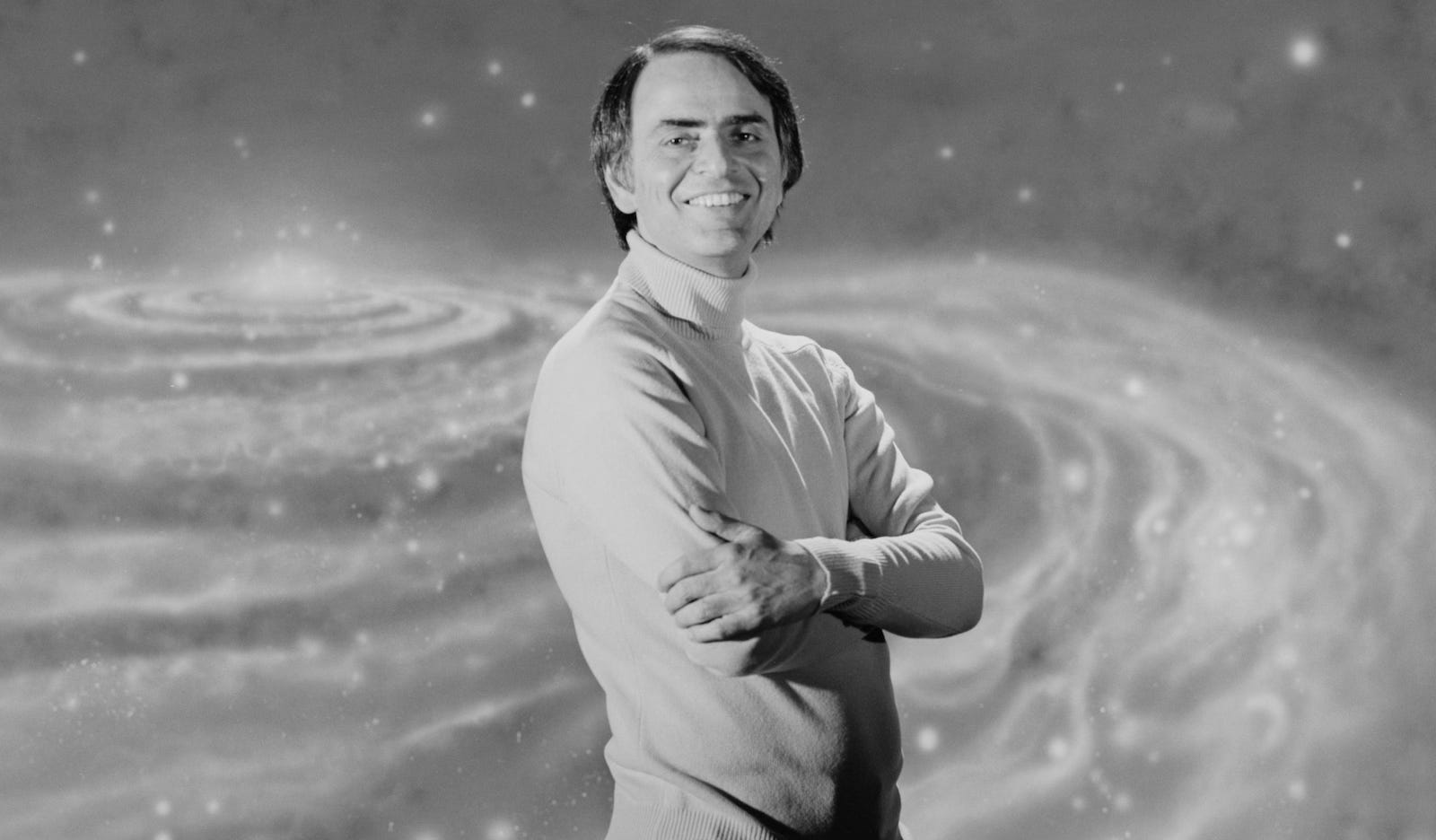
He stayed curious.
He stayed open.
He loved this planet.
He had hope for humanity.
He helped us see that we are all part of something much larger.
That feels like a different set point of intelligence.
What Is Metacognition and Why It Matters?
I came across a short video recently about metacognition.
Metacognition is the ability to think about your own thinking.
To notice a thought as it’s happening.
To question it.
To interrupt a reaction before it takes over.
That landed for me.
Not because it sounded impressive.
Because I’ve experienced a version of it.
For years I thought growth would mean being steady all the time.
Calm. Centered. Unshaken.
That’s not what happened.
It’s more like being a vessel on the ocean.
On the surface things can feel steady.
But underneath, currents are still moving.
My thoughts still move.
My emotions still move.
The difference is I’m no longer trapped inside them.
I can step outside my thinking now.
Even in the middle of an emotional reaction.
Not perfectly. Not every time.
But enough to notice what’s happening.
And that small space changes everything.
I’m no longer stuck in the suffering. Just the symptoms.
That makes me more gentle.
More patient.
More compassionate.
Especially with myself.
If this kind of awareness changes how we live,
it raises a simple question.
What would it look like if the systems we build were shaped with this in mind?
The Risk
If we stay on the lower branches,
AI will amplify whatever is already there.
Fear becomes faster.
Control becomes stronger.
Extraction becomes more efficient.
The same patterns, just at scale.
The Opportunity
This may be the real shift in front of us.
Not just building more intelligent systems,
but building systems shaped by emotional intelligence.
The kind that helps us recognize patterns,
stay curious, and update how we see and respond to the world.
Because emotional intelligence is what leads to emotional maturity.
And emotional maturity is what allows intelligence to be used wisely.
Without it, even the most powerful systems will reflect our fear and fragmentation.
With it, those same systems could help us build something regenerative.
At higher levels of the tree, something else becomes clear.
What helps the whole system thrive
also helps the individual thrive.
Regeneration is no longer an ideal.
It becomes the most practical way to live.
Regeneration is not about being good. It’s about seeing clearly.
Because when you can see the forest,
you understand that harming the system eventually harms you.
And supporting it strengthens everything.
That shift in perspective is what allows humanity to move to a new level.
A Different Future
We tend to fear AI because we can’t imagine what life could be like.
What if AI is not just a tool for profit?
What if it becomes something closer to a shared engine of value?
A kind of golden egg that humanity benefits from together.
Not controlled by a few.
Not designed for extraction.
But something that allows us to rethink how we live.
Less tied to survival.
Less bound to the 9 to 5.
More space to create, contribute, and care for one another.
What if we used that space to build things that are regenerative in every dimension?
Not just economically.
But socially, emotionally, and environmentally.
To see how much better life could actually be.
The Real Question
The question isn’t whether AI will change the world.
It will.
The question is whether we are ready to grow into what it reveals.
AI may show us the forest.
But it can’t make us climb the tree.
That part is still up to us.
I’m curious how others are thinking about this. Do you feel like we’re ready for what AI is revealing?