


In this post: I explore how we often try to solve shared problems through individual decisions, using the film Promised Land (2012) and a recent AMP session as a lens. From HOA decisions to energy and community systems, I look at what becomes possible when people coordinate instead of acting alone, and how AI could help surface win-win solutions that are difficult to see from an individual perspective.
This week, a family member received a letter.
It was a final offer to lease mineral rights on a small piece of land they inherited years ago in West Virginia.
A simple decision on the surface. Sign and receive payment. Or don’t.
But it didn’t feel simple.
There are environmental concerns. Community impact. Questions about long-term consequences. And underneath all of that, something more subtle:
A sense that this wasn’t really an individual decision at all.
Around the same time, I found myself thinking about where I live.
We have over 200 homes in our HOA community. Good people. Smart people. Responsible people.
And I genuinely love my neighbors. We make an effort to connect. Social gatherings, group texts, checking in on each other. It matters to me.
Which makes something else stand out even more.
Despite that connection, every one of us still operates independently when it comes to basic things:
We each choose our own electricity plan
Our own internet provider
Our own lawn service
Our own pool company
Our own cleaning crew
Our own home and car insurance, even as rates continue to climb and we feel largely powerless to do anything about it
Even something as large as solar. Each home evaluating it individually, when negotiated together it could become too compelling to ignore.
Over and over again, the same pattern.
Two hundred homes. Two hundred separate negotiations.
It’s so normal we don’t even question it.
Years ago, I did an Alignment Movie Process session on the film Promised Land (2012).
The movie centers on a rural town being approached by a gas company offering leases for drilling. Each landowner has to decide whether to sign.
The tension is real. The stakes are real.
But watching it again through this lens, something stood out:
The town is never presented with a meaningful third option.
It’s framed as a binary.
Take the deal. Or walk away.
What’s missing is the possibility that they could have negotiated together.
From where each person is standing, the decision looks personal. But step back, and it’s clearly shared.
The outcome isn’t shaped by one landowner. It’s shaped by all of them.
And yet, they never move as a group.
Why?
That question led me back to the AMP session.
Because what’s really driving the decision isn’t strategy. It’s something deeper.
You can see it in the AMP session. There are over 160 belief statements. Here are a few that stood out:
“I need money so I have to do whatever it takes.”
“There’s no other way.”
“I’ll sign anything when the money looks good.”
These aren’t policy positions. They’re emotional states.
Fear. Scarcity. Pressure. Survival.
I’ve been using a simple metaphor recently.
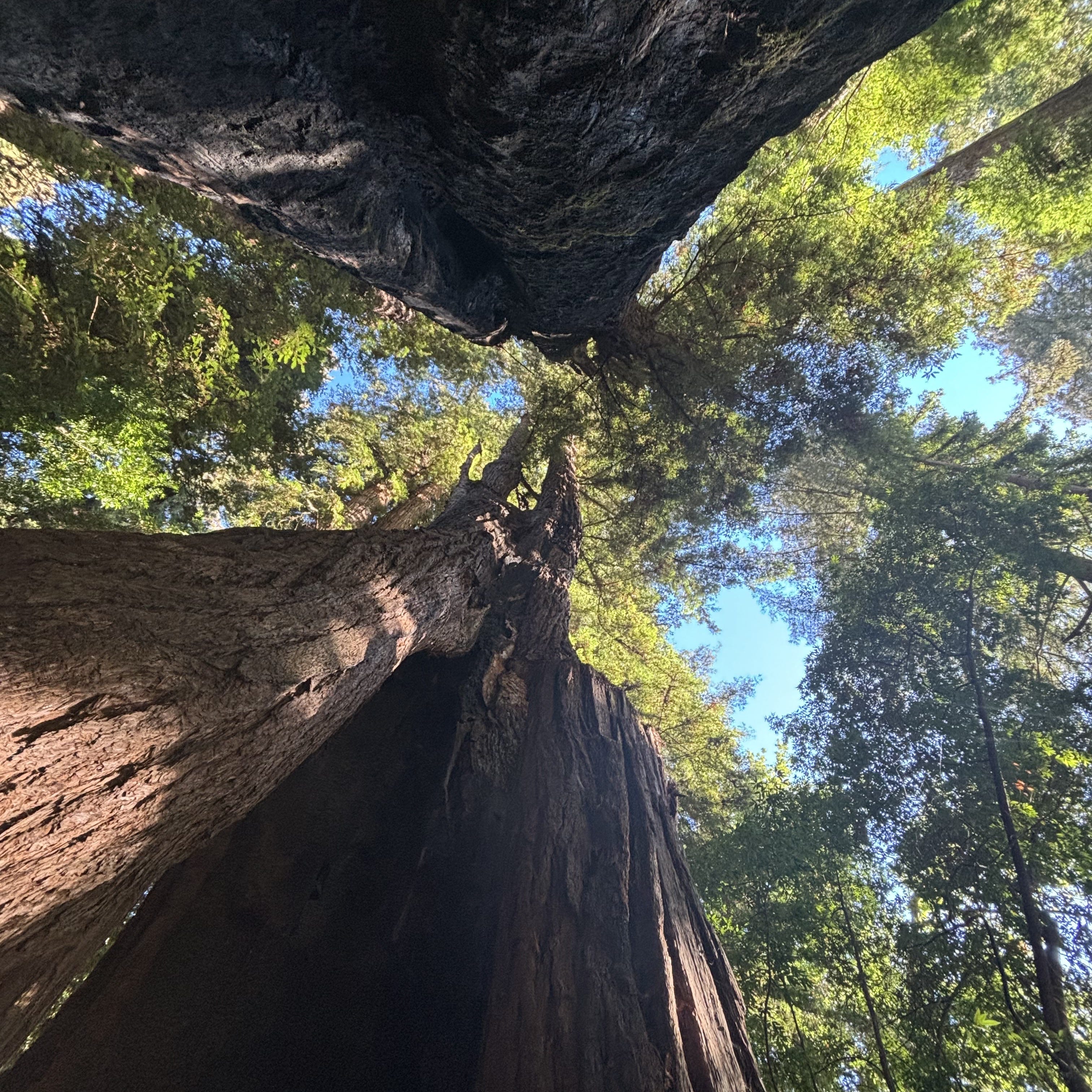
Imagine standing on the lower branches of a tall Sequoia tree.
The thing is, when you’re on the lower branches, you don’t experience it that way.
You don’t feel like you’re on a tree.
It just feels like reality.
It doesn’t feel like a limited perspective.
It feels like the only perspective.
From there, your view is limited. You can only see what’s immediately around you. Decisions feel urgent. Personal. Isolated
Now imagine climbing higher.
At some point, you see the forest.
You begin to realize you’re not alone. That what looked like individual decisions are actually part of a shared system.
From the lower branches, signing the lease looks like survival.
From higher up, it might look like a missed opportunity to shape something better together.
But here’s the part that has been on my mind.
We’re not just on the lower branches.
We’re convinced we have to stay there.
And even when we can see higher, something else shows up.
Fatigue.
Because moving from individual thinking to coordinated action is hard.
It takes time. Energy. Trust. Conversations that don’t always go smoothly.
In my own neighborhood, I can see the opportunity clearly.
But I haven’t led that effort.
Not because I don’t believe in it.
Because I’m tired.
And because I know what it would require to bring everyone along.
There’s another version of this that’s hard to ignore.
What would it look like if our HOA negotiated directly with local farmers for food?
Not as individuals. But together. Better quality. Better pricing. Stronger local relationships.
A clear win for everyone involved.
It sounds simple. But it sits just out of reach.
Not because it’s impossible.
Because we don’t naturally think that way.
And maybe that’s where something I’ve written about before starts to connect.
The idea of an unexpected yoke.
A structure that brings people together around a shared outcome. Not because they have to. But because it serves them.
In one of my earlier pieces, I wrote about how communities often form and grow through these kinds of shared experiences. A choir preparing for a performance. A group working toward something meaningful together. The shared goal becomes the thing that binds them, and in that process, something deeper happens. People grow. They open. They change.
At first, it’s practical.
But over time, it becomes something else. A structure that gently asks more of us.
More communication. More trust. More awareness of how our choices affect others. And because the benefits are real, we stay with it.
We work through the friction instead of walking away.
In that sense, these kinds of coordinated systems might not just make life easier. They might help us grow.
There’s another layer to this.
It’s actually hard to imagine how life would be better if we truly worked together.
Could we lower costs? Probably.
Could we negotiate better services? Likely.
But could we do something more meaningful?
Could we reduce the feeling that we’re each navigating life on our own?
Could we begin to rethink things like healthcare, energy, or shared services in ways that actually support people?
It’s not obvious. And that’s part of the issue.
If we’re always solving things individually, we never experience what coordinated solutions feel like.
And without that experience, it’s difficult to imagine what’s possible.
This is where something new becomes possible.
Not as a replacement for human judgment. But as support for it.
What if coordination didn’t depend on one person carrying it?
What if we could use AI the way we use a great law firm?
To analyze options. Model outcomes. Surface possibilities that only exist when people move together.
Not to make the decision.
But to help us finally see the full set of choices.
In a different version of Promised Land, the town doesn’t just react to the offer.
They step back.
They coordinate.
They explore what’s possible together.
And suddenly, the conversation changes.
This is where I think the conversation around AI has been incomplete.
We tend to frame it in extremes.
As a threat. Or as a savior.
But there’s a quieter possibility.
AI as a coordination layer. A way to reduce the emotional and logistical burden of coming together.
A way to help us see that “there’s no other way” is often just a reflection of limited perspective.
The goal isn’t to outsource our values.
It’s to expand our awareness.
To make it easier to move from fear to clarity
From isolation to coordination
From extraction to stewardship
And maybe most interesting of all…
Notice what we didn’t have to do.
We didn’t have to wait for government to change.
We didn’t have to protest a large corporation.
We simply found a way to come together differently.
To coordinate.
To see more clearly.
To act with greater awareness.
In that sense, we didn’t fight the system.
We stepped into something new, something more livable.
Maybe the next step forward isn’t pushing harder from the lower branches.
Maybe it’s finding new ways to help each other see the forest.
If you want to explore this pattern more directly, try the intention session below and watch this week’s AMP film: Promised Land. See if you begin to get curious about what possibilities we might be missing.
Intention Session
Before the statements, a reminder of why The Intention Session is the first step.
AMP is on your terms, not mine. You only receive what is right for you, in your timing, with grace and ease. I am simply putting up the resonance for anyone who wants it. People process in their time. It is meant to be graceful. So do this first, and you will get the resonance benefits listed below - on your terms and timing
Step one:
You only need to do this once before you watch the film Promised Land (2012). If you have already completed an Intention Session, it carries over for all of the AMP movies I talk about, so you do not need to repeat it.
Speak these aloud:
I set the intention to see beyond the illusion that there is only one way forward
I allow clarity to emerge with grace and ease
I release the need to rush decisions under pressure
I allow new possibilities to reveal themselves in their own timing
Engage three simple modalities:
Nod your head yes.
Drink some water.
Take several slow, rhythmic breaths through your nose.
Then watch Promised Land all the way through.
There are over 150 intentions included in this Promised Land AMP session. Below is a short summary of what you can expect if you choose to do this AMP session. For now, I’m making these intentions available to everyone
Let Go
I let go of the belief that there is no other way
I let go of making fear-based decisions about money
I let go of needing to handle everything on my own
I let go of assuming others are separate from me in shared outcomes
I let go of rushing into agreements without full awareness
⸻
Allow
I allow myself to see the bigger picture clearly
I allow coordinated solutions to emerge naturally
I allow win-win outcomes to be possible
I allow support in making thoughtful decisions
I allow a new way of thinking about shared challenges
About David
David Barnes is the co-creator of the Alignment Movie Process (AMP), a framework developed over 20 years to help individuals and groups recognize and shift the emotional patterns that shape decision-making.
His work explores how people move from reactive, fear-based thinking to more balanced, coordinated, and generative ways of engaging with each other and the systems around them.
David is currently focused on how AI can support this shift, not by replacing human judgment, but by helping people see and act on shared solutions that are often invisible from an individual perspective.
He lives in Texas with his wife, Lura, and their dog Cosmo.