



In This Post: Last week I wrote about collective sovereignty, the idea that AI could help ordinary people see clearly together, coordinate choices, understand leverage, and reclaim some power over the systems that shape daily life. This week I want to ask why we do not already have more of it. One answer is fear. When people live too close to the edge, the current system starts to feel like reality itself, and survival takes up too much attention to ask whether another way is possible. Fear sustains the illusion, and this post is about beginning to unwind it.
Why This AMP Session Now?
This post is part of the collective sovereignty arc, but it also comes from my own AMP work. The Matrix Revolutions (2003) was one of the sessions that helped me see the business and money illusion more clearly, not as an abstract theory, but as a felt pattern: how fear, insecurity, poverty, and economic pressure can make a constructed system feel like reality itself.
That is why I am returning to it now. The film is not here as entertainment or nostalgia. It is a mirror. It helps us look at the illusion from a safe distance so we can begin asking what might be possible beyond it.
If you watch the trailer or the film, I invite you to do it with an open mind and heart. Not to agree with me, but to notice what the story reveals about fear, systems, control, choice, and the possibility of a different agreement.
The Matrix Is Not Only Science Fiction
In It’s Just Commerce, I wrote about The Matrix as a way to understand how difficult it can be to see an illusion while we are living inside it. Neo has the feeling that something is wrong with the world, but he cannot name it. Morpheus eventually tells him that the Matrix is the world pulled over his eyes to keep him from seeing the truth.
That is still one of the most useful things a film can do. It lets us look at a pattern from a safe distance. We can see the illusion in the story before we are ready to see it in ourselves, our institutions, or our economy. The Matrix is not only a story about machines. It is a story about a constructed reality people accept as normal because they do not yet know how to see beyond it.
Extractionocracy Is the Illusion
The illusion I am thinking about now is not simply “money is fake” or “business is bad.” That is not my point. Commerce is not the problem. Business is not the problem. Human exchange, creativity, enterprise, innovation, and trade can all serve life beautifully when they remain in balance.
The illusion is Extractionocracy.
By Extractionocracy, I mean a system where extraction quietly becomes the organizing principle. People, communities, attention, labor, health, land, public money, trust, and even emotional energy become resources to be pulled from, optimized, and monetized. Over time, the system can depend on people while serving them less and less.
The illusion is the belief that this is simply how life works. Poverty, job insecurity, medical fear, debt pressure, housing instability, rising energy costs, and dog-eat-dog competition can begin to feel like natural features of reality rather than outcomes of choices, structures, incentives, and priorities.
That illusion holds because many powerful institutions benefit from it continuing. Business benefits from it. Government often accommodates it. Media can amplify it. Politics can divide people inside it. When enough of us are afraid, exhausted, and busy surviving, we may not have the time or energy to ask whether the whole arrangement is as inevitable as we have been told.
Primal Fear Is Part of the Architecture
The fear I am talking about is not vague fear. It is primal fear, the kind that lives close to survival itself: losing a job, losing health insurance, falling behind, facing medical bankruptcy, losing a home, being unable to care for children or aging parents, or being pushed out of the economy altogether.
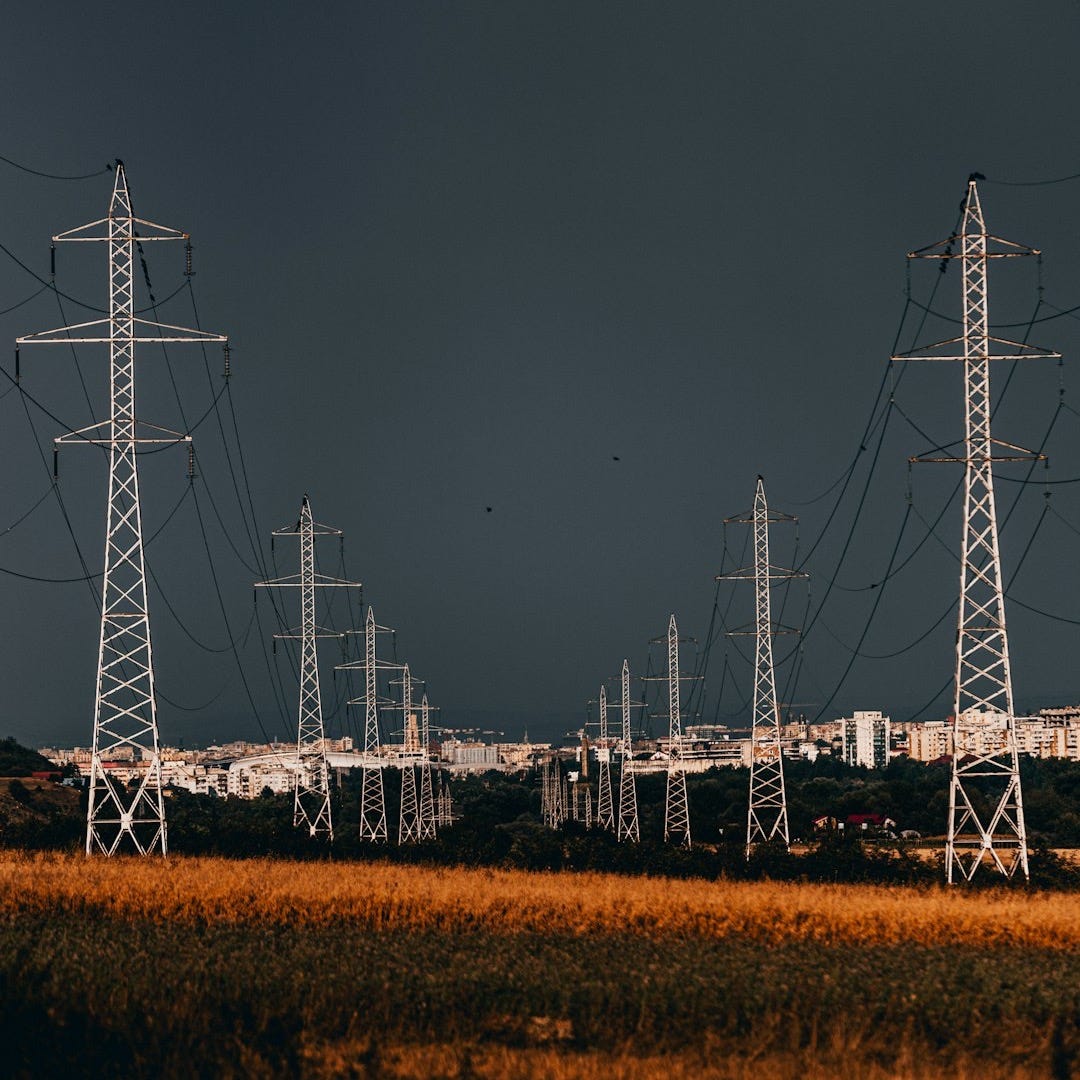
Now we can add other fears to the list. Weather is becoming a real and growing threat. Energy costs keep rising. We are being told that electric grids may not hold up under the pressure of new demand. Reuters recently reported that U.S. residential electricity prices are expected to rise in 2026 and 2027, with AI and data-center expansion contributing to power-demand growth, while Texas is projected to see some of the largest electricity-demand increases.
Fear is the felt experience. Insecurity is the structure that keeps producing it.
And fear does not only live at the bottom of the system. Those at the top often have their own fear too: fear of losing control, losing status, losing insulation, and losing the structure that protects them from the consequences of the system they benefit from. That fear can make Extractionocracy defend itself even harder.
When fear and insecurity operate at that level, people have less room to imagine a different system. They are trying to get through the week, keep the lights on, stay employed, protect their families, and avoid falling through the floor. That is part of what keeps the illusion in place.
Poverty as “Just the Way It Is”
One of the deepest parts of the illusion is how easily poverty gets normalized. Poverty is often treated as if it reveals something about the person experiencing it. They did not work hard enough. They did not make the right choices. They did not “make it happen.”
But what if poverty also reveals something about the system?
What if an economy can become so organized around extraction, scale, and competition that insecurity becomes one of its hidden operating systems?
In the United States, this fear can become especially intense because so much survival is tied to employment and individual financial resilience. Losing a job can mean losing health insurance. A serious medical problem can become a financial crisis. Family leave is often thin. Child care can feel impossible. Unemployment support can be limited. Housing costs can overwhelm working families. Many people are doing everything they can and still feel one disruption away from disaster.
When people are afraid of falling, they cling to whatever gives them a little security. They may even defend the very system that keeps them under pressure because the alternative feels too risky to imagine. That is the cage.
What Matrix Revolutions Adds
This is why The Matrix Revolutions feels like the next step in the collective sovereignty arc. The first Matrix movement is awakening. The illusion is seen. The mind begins to free itself. But Matrix Revolutions moves into a different question: after we see the illusion, how do we end the war?
That question matters because waking up is not enough. If all we do after waking up is fight inside the same old battlefield, the old system still gets to define the terms. It knows how to fight. It knows how to produce enemies. It knows how to turn reform into us-vs.-them. It knows how to keep people reactive.
In The Matrix Revolutions, Neo does not win by escalating the old battle forever. He goes to the machine world, sees the conflict differently, and makes possible a new arrangement the old war logic could not produce. The machines do not suddenly become sentimental. They are not loving in a human sense. But the structure of the conflict becomes visible enough that a different agreement can emerge.
That may be one of the best metaphors we have for what AI could become at its best: not a new weapon in the old fight, but an intelligence layer that helps us see the system clearly enough to unwind it.
A Better Map
The way out may not require a brand-new philosophy. It may require a better structure. A better arrangement. A regenerative design that keeps what works, releases what extracts, and gives people a way to participate without being consumed.
There are probably many good ideas waiting to be dusted off: community experiments, cooperative models, regenerative business plans, local economies, faith-based efforts, nonprofit structures, small-business networks, and civic ideas that saw something true before the tools existed to support them.
Not every idea will work. Some will be too idealistic. Some will need better economics, better technology, better governance, or better emotional maturity to hold them together. But AI could help us explore them more intelligently. It could help test assumptions, model consequences, simplify complexity, connect people with shared interests, and identify structures that might be regenerative and lasting.
Maybe the next step is not to fight the Matrix harder, but to build a better map.
AI Could Help Us See the Exits
The danger is that AI will be used to make Extractionocracy more efficient: more prediction, more persuasion, more segmentation, more automation, more optimization of human attention, labor, purchasing, data, and emotion.
But there is another possibility. AI could help people see the exits we keep missing.
It could help us understand complex systems without requiring every exhausted person to become an expert in health care, tax policy, public budgets, corporate lobbying, energy markets, insurance, housing, education, and local government. It could help communities understand where the pressure is coming from, compare options, coordinate buying power, track public money, understand legislation, and make steadier decisions together.
In other words, AI could help people map a pathway out of the illusion.
But AI should not become the savior. That would only create a new illusion. The point is not machine sovereignty. The point is human sovereignty, strengthened by intelligence that helps us see together.
A Peaceful Path Is Not a Weak Path
If the goal is to unwind an old illusion, more force may not be the best tool. Systems that depend on fear and conflict are often very good at using fear and conflict to preserve themselves. They know how to create drama, attract opposition, and keep people fighting while the deeper structure stays intact.
That is why a quieter path may be wiser. Not secret. Not passive. Strategic.
In some ways, that has been the path of our AMP work. For nearly twenty years, the Alignment Movie Process has developed quietly, not because it was meant to be hidden, but because some work needs time to mature before it can be carried into the world with steadiness. The goal was never to attack the old pattern. The goal was to create a new one strong enough to stand.
That may also be the better path for AI and collective sovereignty. We do not need more drama or more us-vs.-them. We need intelligence that helps people see the pattern, find the openings, coordinate wisely, and begin building something more humane downstream.
A peaceful path does not mean avoiding change. It means finding a downstream way to change without endlessly energizing the forces committed to keeping the old arrangement intact.
Collective Sovereignty Sustains Less Fear
Collective sovereignty is not only about information. People already have too much information. What people need is usable clarity and enough steadiness to make better choices together.
A person living in survival fear has very little room to imagine a new system. A community trapped in economic fear has very little room to coordinate. A country held in constant us-vs.-them conflict has very little room to notice where power is actually moving.
That is why any meaningful alternative has to be structured differently. It cannot depend on fear as the motivator. It cannot keep people isolated, exhausted, and reactive and then claim to serve them.
A more humane AI would not simply give people more content. It would help reduce confusion. It would help people see what matters. It would help communities find practical next steps. It would support emotional maturity instead of amplifying reactivity.
That is how people become harder to extract from, not by becoming angrier, but by becoming clearer.

The Illusion Can End
In The Matrix Revolutions, Neo helps save humanity. That is powerful storytelling, and it speaks to something deeply embedded in the human psyche. We keep looking for the one who will deliver us: the hero, the president, the founder, the savior, the genius, the leader who will finally make the system right.
But collective sovereignty asks something more mature of us.
No one person is going to save us.
Leadership matters. Courage matters. But the next step may not be waiting for another Neo. It may be learning how to see together, decide together, build together, and create structures that do not require one heroic person to carry the future for everyone else.
That is where AI could help if we aim it wisely. Not as savior, ruler, or replacement, but as a tool that helps human beings understand systems, reduce confusion, find pathways, and coordinate with more grace than we have been able to before.
Maybe the way out is not another battle. Maybe the way out is not another savior. Maybe the way out is a better map, a steadier people, and a new willingness to come together.
It is time we come together.
Before the Statements
The Alignment Movie Process session for The Matrix Revolutions was originally created to work with themes of illusion, choice, fear, sacrifice, persistence, war, peace, and the possibility of a new agreement after an old conflict has run its course. In the context of this post, I am revisiting the film through the lens of Extractionocracy, economic fear, collective sovereignty, and how AI might help us see pathways out of systems we have mistaken for reality.
You do not have to force these statements. Read the ones that stand out. Let them work the way music works. Sometimes one line is enough to help you hear something differently.
Intention Session
AMP is always on your terms. You only receive what is right for you, in your timing, with grace and ease. The purpose of the Intention Session is simply to help you become more open and receptive before watching the film.
Step One: The Intention Session
You only need to do this once before watching The Matrix Revolutions. If you have already done an Intention Session with another AMP film, it carries over.
Speak these aloud:
I allow the changes in my own timing and only integrate what I am ready for.
I have faith that I will receive the benefits I desire.
I am patient with myself as I make these changes.
I let go of feeling I am too busy to take the time for this.
I let go of needing to understand how AMP works and allow myself to receive what is right for me.
Then engage three simple modalities:
Nod your head yes.
Drink some water.
Take several slow, rhythmic breaths through your nose.
You’re now ready to watch your AMP film.
A Few Let Go / Allow Statements
As always, these are not the full AMP session. They are a small public sample to help readers feel the direction of the pattern.
Let Go
I let go of believing economic fear is the only reality available to us.
I let go of accepting poverty, exhaustion, and insecurity as the best humanity can do.
I let go of needing to fight the old system in the same way the old system fights.
I let go of giving my power to confusion, reactivity, and fear.
I let go of mistaking survival pressure for truth.
Allow
I allow myself to see the patterns that keep people afraid.
I allow new pathways to become visible with grace and ease.
I allow AI to be imagined as a tool for human sovereignty, not human management.
I allow collective clarity to grow quietly and steadily.
I allow a new way of business, money, and community to become possible.
About David
David Barnes is the co-founder of Peace of Mind Overtures and co-creator of the Alignment Movie Process, a practice that uses film, intention, and carefully developed resonance statements to help people notice emotional patterns, release old reactions, and find their own way back to balance.
His work explores emotional maturity, coherence, collective focus, and how AI might help humanity find the signal instead of amplifying the static.