


There are moments in life when intimacy finds us before we feel ready.
My first uncomfortable lesson in intimacy was with Rich, a co-worker when I was in sales and marketing at Ford. I was 29, a newly minted manager. Rich was 10 years older, more experienced, and we had the kind of relationship that swung between brotherly and infuriating. Our regional manager Bill affectionately called us Lenny and Squiggy and loved throwing us onstage together.
One day in San Antonio, we were about to present to top Ford executives and 25 of our biggest dealers. We’d done these meetings before. This was our chance to shine.
Thirty minutes before we were supposed to start, my phone rang.
“Dave, get over here to my room. Now.”
I was already in my suit, slides ready, mind in game-mode.
“Rich, what are you doing? We go on in half an hour.”
“Just get over here.”
When I walked into his room, Rich was half dressed. Shirt open. Tie in his hand. He looked… stuck.
“Help me get dressed,” he said.
I froze.
Everything in me wanted to bolt. This felt too personal, too exposed, too intimate. Helping another man button his shirt and knot his tie? I had no framework for that. No training. No language.
But there we were. The clock ticking. No one else around.
So I stepped closer.
I buttoned his shirt.
I tied his tie.
On the outside, I was efficient. On the inside, I was deeply uncomfortable. Something in me knew this moment wasn’t really about clothing. It was about letting myself be that close to another human being when part of me only knew how to relate at a safer distance – through work, banter, teasing, performance.
I didn’t know it then, but that moment was the first small crack in the shell I’d built around my heart.
That night turned into an all-nighter at a San Antonio hospital.
Rich had been having trouble using his arms. None of us understood why. In the strange fluorescent glow of that hospital, we finally got the answer: the cancer had spread to his brain. That’s why he couldn’t button his shirt. That’s why his body wasn’t cooperating.
It fell to me to call his wife and tell her.
I can still hear the sound of her wailing on the phone as the news landed. There are no “manager skills” for that moment. No toolkits. No bullet points. Just the raw, unbearable intimacy of being the one who carries shattering news into someone’s life.
It was far too intimate for the version of me that still thought he could manage everything from a safe emotional distance.
Later, as his illness progressed and it became clear he was dying, Rich asked me to be with him when he died.
Every instinct I had wanted to say no. I didn’t feel equipped. I didn’t know how to “do it right.” I wanted to avoid the rawness of that room, the sounds, the smells, the reality that my friend was leaving.
Lura, in her wise way, said simply,
“David… you can’t pass when a friend asks you to be there when he dies. You need to go.”
So I went.
I sat with him. I watched his body do what bodies do at the end. I heard the breathing shift. I felt the strangeness of being in a room where life and death were both fully present. I put my hand on his chest and soothed him.
And something in me opened.
Not with fireworks or angels or perfect words. Just a quiet, trembling willingness to stay instead of run.
Six months later, almost to the date, I left The Ford Motor Company.
Looking back, I can see that these three moments with Rich: the shirt and tie in San Antonio, the all-nighter in the hospital, and the bedside at the end, were my first real teachers of intimacy:
• letting myself be close when I’d rather be competent
• staying present when my nervous system wanted out
• allowing another man’s vulnerability to touch my own
What We (Especially Men) Miss About Intimacy
Most of us were not raised with a lot of skill in this area.
As boys, we feel everything. We cry. We get overwhelmed. We’re sensitive and whiney and dramatic. And somewhere along the way many of us are told, directly or indirectly:
Toughen up.
Don’t be so sensitive.
Anger is okay. The rest? Not so much.
So we shut down whole regions of our emotional GPS.
We keep anger. That one’s “manly” and useful in business and sports. You can bang on a table in a meeting and people call you decisive. You can yell at a TV and that’s normal Sunday behavior.
But grief? Fear? Tenderness? Longing?
We quietly vote those off the island.
The problem is: when anger is the only tool in your toolbox, everything starts to look like a nail. We try to run companies, marriages, friendships, and even our own inner lives with a hammer.
It doesn’t work. It creates imbalances. And we don’t even know what we’re missing.
We soothe the ache with work, achievement, hobbies, scrolling, substances, over-functioning, or isolation. We say yes to more projects and no to the very intimacy we’re starving for.
In my AMP work, I don’t go hunting for “the right film” to fix a pattern. It’s more like the films hunt for me. When a particular pattern is swirling, when my reactivity is up, the same conflict keeps looping, and my awareness quietly says, “Let’s move this”, a movie will land in my life with that exact resonance.
That’s how this next one arrived.
Learning Intimacy from a Wild Horse
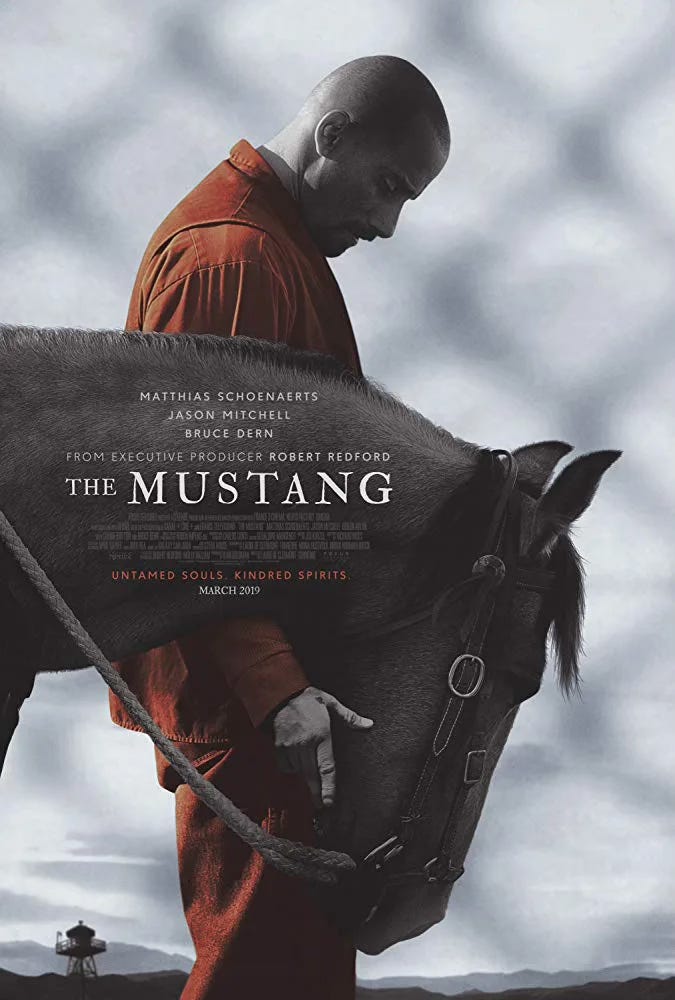
The AMP film is The Mustang, a quiet, powerful 2019 movie written and directed by Laure de Clermont-Tonnerre and developed through the Sundance Institute, with Robert Redford as one of its executive producers.
It’s based on real prison programs in Nevada where inmates are paired with wild horses and given twelve weeks to gentle them so they can be adopted. In the film, Roman (played by Matthias Schoenaerts) is an inmate serving time for a violent crime. He is angry, shut down, and convinced he’s “not good with people.”
Because he’s so difficult, the prison assigns him to shovel manure in the mustang program. That’s how he meets a horse who has been labeled “untrainable” — a fierce, terrified animal who crashes against the walls of his pen and wants nothing to do with humans.
From the first moment, the parallel is obvious:
Roman and the horse are both caged.
Both have been violent.
Both have learned that other beings are a threat.
When things get too intense, Roman does what many of us do in relationships:
He pushes away any real connection.
He tries to control or dominate what he doesn’t understand.
When he feels vulnerable or exposed, he explodes.
There is a brutal scene where his frustration boils over and he attacks the horse in a fit of rage. It’s hard to watch and painfully familiar. It’s that inner voice that says:
“I would rather destroy this than feel how powerless and exposed I am.”
The horse, for his part, behaves exactly like a traumatized nervous system:
He refuses closeness.
He bolts, kicks, and tests every boundary.
He doesn’t believe safety is possible.
No words. No story. Just pure, embodied
“I don’t trust you.”
As Roman slowly learns to regulate himself around the horse, to soften his shoulders, breathe, wait, listen - something shifts. The horse calms. And so does he. Their relationship becomes a mirror for Roman’s own healing:
He becomes less explosive.
He starts to let himself care.
He tentatively re-engages with his pregnant daughter.
By the end, he is still a flawed man in prison, but he is different: calmer, more reflective, more able to stay present when things get real.
Because this story is told through a man and a horse, instead of a romantic couple, it’s easier to see the pattern without getting tangled in our usual “who’s right / who’s wrong” scripts.
We just watch two scared beings, both wired for freedom and both terrified of closeness, slowly learn how to stand together without bolting.
That’s why I built an Alignment Movie Process (AMP) session around The Mustang. It’s one of the clearest mirrors I’ve ever found for how intimacy actually works in the body, especially for those of us who would secretly rather isolate than risk being hurt again.
How the AMP Session Holds This Pattern
In the Mustang AMP, many of the statements come from the book Attached: The New Science of Adult Attachment and How It Can Help You Find—and Keep—Love by Amir Levine and Rachel Heller.
That book describes three main attachment styles in adult relationships — anxious, avoidant, and secure, and how they play out in everyday life.
In the session, we name patterns like:
“When I feel closeness and intimacy increasing in relationships I push people away.”
“I grasp for closeness when I feel threatened in my relationship.”
“I avoid my partner when things get too close.”
These are Roman’s patterns. They’re also mine. Maybe they’re yours.
Later in the AMP, we widen the lens with material inspired by Jack Kornfield’s After the Ecstasy, the Laundry and Carin Block’s Creating Order in the Family System, reminding us that intimacy doesn’t live only in romance. It lives in family karma, old wounds, and the people who knew us before we had spiritual language for any of this.
That’s the space where my story with Rich belongs.
That’s the space where your stories live too.
Five “Allow” Statements from The Mustang AMP
These are Allow statements directly from the Mustang session. You can read them slowly, maybe even out loud, and let your nervous system feel what they point toward:
I allow myself to retreat to my inner sanctuary, a space of light inside of my heart, and I discover a deep sense of peace.
I allow myself to explore and find freedom from the constraints of my own community.
I allow myself to travel and discover the multiplicity of life and all of its powers.
I allow my desires, especially sexual, to flourish.
I allow Horse energy to gift me with the power and endurance needed at this time.
You might notice: none of these are about perfection. They’re about opening to movement, desire, and inner refuge — all ingredients of real intimacy.
Five “Let Go” Statements from The Mustang AMP
These Let Go statements sit alongside the Allow list in the session. They help loosen the old armor:
I let go of any addictions I have to my partner.
I let go of any chronically activated attachment system with my partner and find peace of mind.
I let go of my jealousy about my partner and another person having sex with him or her.
I let go of my abandonment issues.
I let go of all that is superficial in my life and reconnect to my true nature.
If one or two of these land with a little “thud” inside you, that’s okay. You don’t have to force anything. Just notice. Your system is already doing something with them.
Experience the AMP Session The Mustang Yourself
If you would like to experience the resonance of this AMP session, you can begin with this simple Intention Session. It helps align your body, mind, and emotions so you receive the full benefit of the resonance. You only need to do this once before you watch the film. If you have already completed an Intention Session, it carries over for all of the AMP movies I talk about, so you do not need to repeat it.
Step 1: Speak these aloud
I allow the changes in my timing and only integrate what I am ready to.
I have faith that I will receive the benefits I desire.
I am patient with myself as I make my changes.
I let go of feeling I am too busy to take the time for this.
I let go of needing to understand how AMP works and allow myself to receive the full benefits in my own timing.
Step 2: Engage three simple modalities
Nod your head yes.
Drink some water.
Take several slow, rhythmic breaths through your nose.
Then simply watch The Mustang all the way through. Do not force insights. Just notice what stirs. Notice where you feel close and where you want to pull away. Notice who feels like us and who still feels like them.
Trust that the resonance will do its work gently, in your own timing, with grace and ease.
A Quiet Gift from Robert Redford
There’s one more layer I want to acknowledge.
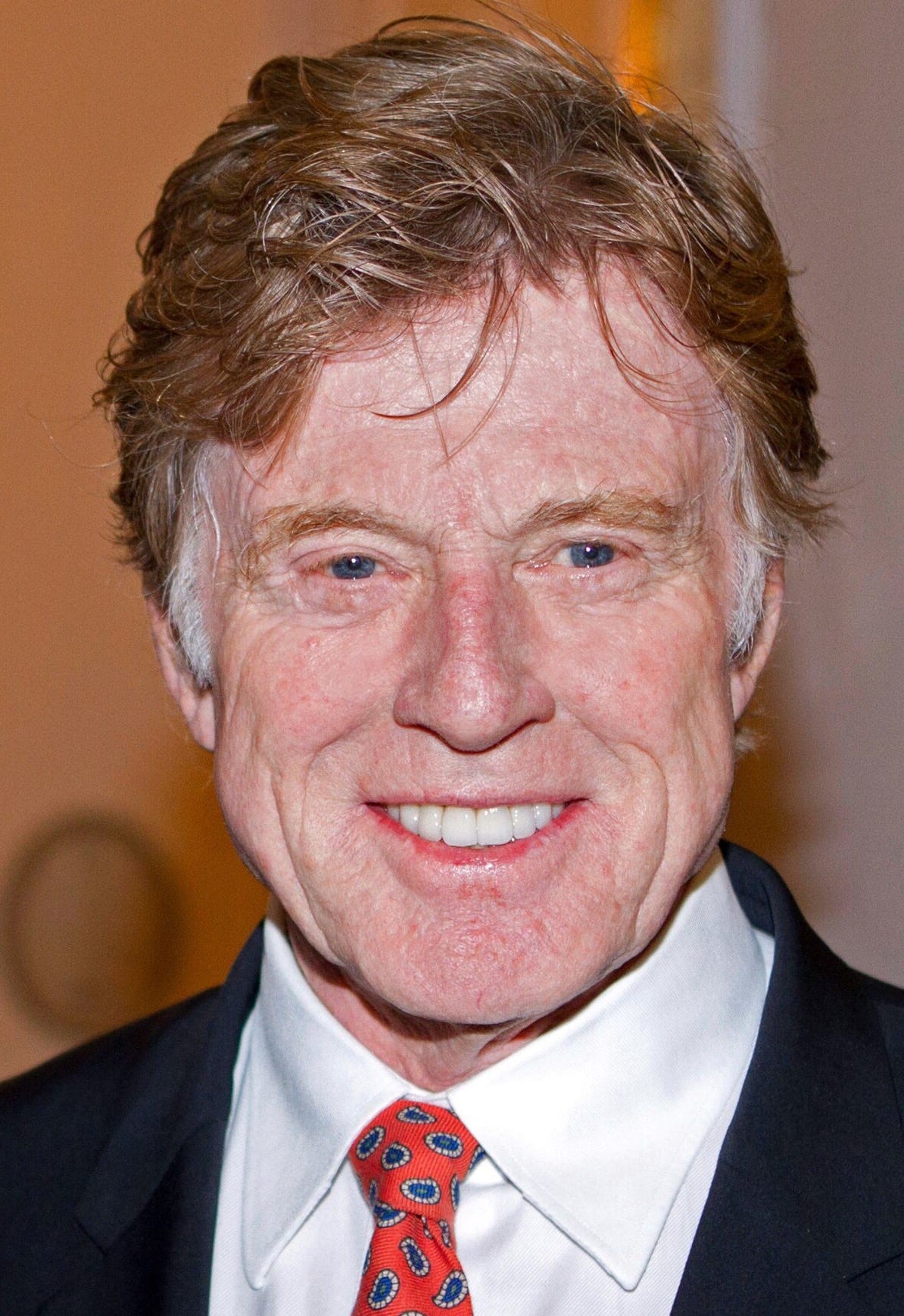
The Mustang was executive produced by Robert Redford, who helped shepherd it through the Sundance ecosystem as part of his lifelong commitment to independent film and stories with emotional weight.
Redford died this year at 89, at his home in Utah.
If you ever watched him on screen or listened to people talk about him, you may have felt what I did: an open-hearted steadiness, a kind of peaceful presence underneath the charisma. Tributes remember not just his iconic roles and awards, but his generosity, activism, and his creation of the Sundance Institute as a home for independent voices.
Knowing that he stood behind this quiet, intimate film, a story about freedom, responsibility, and the rough grace of second chances - gives it an extra layer of meaning for me. It feels like one small thread in the tapestry of the kind of cinema he spent his life nurturing.
If Intimacy Makes You Want to Run
If you’re reading this and part of you wants to bolt…
If your version of Roman is the part that says,
“I’m just not good with people”…
If your Rich moment is still ahead of you: a phone call, a bedside, a request you don’t feel ready for…
Then this post is for you.
You are not behind.
You didn’t miss the class on intimacy.
Your nervous system has simply been doing its best to protect you.
Movies like The Mustang, stories like Rich’s, and practices like these Allow and Let Go statements are not here to judge you.
They’re here to walk with you, one small step closer to the kind of intimacy that doesn’t demand perfection - only presence.
If this helps even one person feel a little less alone in the tender, too-close places… that’s enough for me.
In the end, it really is one-to-one that changes things, isn’t it?